ChiropracticPhysiotherapySports MassageFind usTeamPricingContactInsuranceGift CardBook Now

Soft Tissue Therapy · City of London · Moorgate

Tight, aching muscles that never quite let go.

600+ reviews·5.0 on Google · 4.9 on Trustpilot

Sports massage and soft tissue therapy — City of London.

Persistent tightness through the neck, shoulders, back or legs — the kind that builds across the week and does not clear with stretching. Our STA and SMA-registered soft tissue therapists treat it directly, and work alongside our chiropractors and physiotherapists where the cause sits deeper than the muscle.

Appointments Available Today

600+reviews · 5.0 on Google · 4.9 on Trustpilot
1 min walkFrom Moorgate Tube
4Appointments Available Today
13.5Yrs Avg. Chiro Experience

Muscle Tension, Tightness & Trigger Points

What is muscle tension — and why won't it release?

Muscle tension is a sustained rise in resting muscle tone — muscles holding a partial contraction when they should be at rest, producing tightness, aching, tender points and a reduced range of movement.

Three mechanisms account for most of it. Sustained low-level load, where a muscle is asked to hold a position for hours rather than move through range. Protective guarding, where tone rises around a stiff joint or an irritated structure and stays up. And stress-driven tone, where the neck, jaw and shoulder muscles carry a baseline of activity that never fully switches off.

This is why stretching alone so often disappoints. If the tension is secondary to something else — a restricted joint, a weak muscle elsewhere in the chain, an old injury that changed how you move — then releasing the tight muscle gives real but short-lived relief, because the reason it tightened is still there. Assessment looks for that reason rather than treating only where it hurts.

Reviewed by Emma Daniells BSc(Hons) MSc DC ICSSD — Co-Founder • GCC Registered • BCA Member · Last reviewed

City of London · Muscle Tension

Why desk work produces this pattern so reliably

A working day spent typing, holding a mouse and looking at a screen asks the upper trapezius, levator scapulae and the muscles at the base of the skull to hold a fixed position for hours at a time. That is a static endurance task, and muscles are poor at it. Add back-to-back meetings, a shallow breathing pattern under deadline pressure, and a commute at each end, and the tone never gets a chance to drop.

The recognisable version of this is tension that eases on holiday and returns within days of getting back. That pattern is useful diagnostically: it points at load and recovery rather than at anything structural, and it tells us where treatment needs to be paired with changes to the week itself.

Symptoms

Symptoms of persistent muscle tension

  • A constant background tightness across the upper back, shoulders and neck
  • Muscles that feel hard or ropey to touch, sometimes with distinct tender nodules
  • Aching that builds through the working day and eases at weekends or on holiday
  • Reduced range of movement — turning the head, reaching overhead, bending or twisting
  • Tension headaches starting at the base of the skull and spreading forward
  • Difficulty finding a comfortable sleeping position, or waking stiff
  • Stretching that helps for minutes rather than hours
  • Aching referred into the arm or down the back with no clear nerve pattern to it
💡

When it is worth looking further

Tightness that keeps returning to exactly the same spot despite regular treatment, or that comes with pins and needles, numbness or weakness, is worth a fuller assessment. Both patterns suggest something other than the muscle is driving it.

Soft Tissue Therapy for Muscle Tension

What treatment for muscle tension involves

Treatment combines hands-on soft tissue work to reduce the tension you have now with an honest look at what keeps producing it. Where the driver is a restricted joint or a muscle imbalance, we co-manage with our chiropractors and physiotherapists rather than treating the same tight muscle indefinitely.

1

Assessment — what is holding the tension

A look at range of movement, the pattern of tightness and the load in your week, plus which muscles are working overtime for something that is not pulling its weight. This is what decides whether soft tissue therapy alone is the right treatment.

2

Soft tissue and deep tissue work

Direct treatment of the affected muscle groups to reduce tone, restore length and improve local circulation. Depth is matched to what the tissue will tolerate on the day — harder is not better, and a session that leaves you sore for a week has not helped.

3

Trigger point and myofascial release

Specific work on the tender points that refer pain elsewhere, and on the fascial restrictions that limit how a muscle glides. This is usually where the referred aching into the arm, head or back responds.

4

Assisted stretching and movement

Guided stretching through a fuller range than you can reach unaided, plus a small number of specific things to do between sessions. Two or three exercises done consistently outperform a long programme that gets abandoned.

5

Co-management where the cause is a joint

Where assessment points at joint restriction or a strength deficit, we bring in chiropractic or physiotherapy alongside. Treating the tight muscle in isolation is what produces the cycle of relief and return.

Getting Here

Muscle tension near Moorgate?
We're one minute away

118A London Wall, EC2Y 5JA — one minute from Moorgate station. Open 7:30 am to 7:00 pm, Monday to Friday, to fit around even the most demanding schedule.

Getting Here — Under 10 Minutes

Opening Hours

Structured for City workers — before, during and after the working day

Monday – Friday7:30 am – 7:00 pm
Saturday & SundayClosed
Online booking24 hrs / 365 days
16,174
Patients Treated at Bodymotion Chiropractic
Back pain, neck pain, sciatica and sports injuries
600+
Reviews
5.0 on Google · 4.9 on Trustpilot
20
Years Established
118A London Wall, EC2 since 2006
13.5
Yrs Avg. Chiro Experience

Causes of Muscle Tension

What causes persistent muscle tension?

Sustained static loading

Holding a position for hours — at a desk, in a meeting room, on a flight — asks postural muscles to do endurance work they are not well suited to. Tone rises, local circulation drops, and the muscle stops fully releasing between periods of load.

Protective guarding around a stiff joint

When a joint is restricted or irritated, the muscles around it increase tone to limit movement. That is a useful short-term response and a poor long-term one. Treat only the muscle and the guarding returns, because the joint has not changed.

Muscle imbalance through the chain

Where one muscle is weak or inhibited, another takes on work it was not designed for. The overworked one is the one that hurts, which is why the tender spot and the actual problem are often in different places.

Stress and breathing pattern

Sustained pressure raises baseline tone in the neck, jaw and shoulder girdle, and a shallow upper-chest breathing pattern recruits the neck muscles into work that the diaphragm should be doing. Both are common and both respond to treatment plus specific retraining.

Training load without recovery

Volume added faster than the tissue adapts leaves muscles in a persistently elevated tone. Common in people training around a demanding job, where the sessions get scheduled and the recovery does not.

Clinically reviewed by Emma Daniells BSc(Hons) MSc DC ICSSD — Co-Founder • GCC Registered • BCA Member · Bodymotion Chiropractic · Last reviewed

⚠ EMERGENCY — ATTEND A&E IMMEDIATELY (call 999 if severe)

A sudden, severe headache, often described as the worst headache of your life

Headache or neck stiffness with fever, a rash, or sensitivity to light

Weakness, numbness or clumsiness in both arms or legs, or difficulty walking

Loss of bladder or bowel control, or numbness around the genitals or bottom

Neck or back tension with chest pain, jaw or left arm pain, or breathlessness

Dizziness, double vision, slurred speech or facial numbness

See your GP urgently

  • Muscle pain or tension with unexplained weight loss, fever or night sweats
  • Pain that is constant, getting worse, and not eased by rest or changing position, including at night
  • Pins and needles, numbness or weakness in one arm or leg
  • New muscle pain or stiffness if you are over 50, especially in both shoulders or hips, or with stiffness lasting over an hour in the morning
  • Headaches that are getting more frequent or severe, or that wake you up

Your Sports Massage Therapists

STO & SMA-registered soft tissue therapy,
tailored to your recovery in the City of London

Our sports massage therapists are members of the Sports Therapy Organisation (STO) or the Sports Massage Association (SMA), hold professional indemnity insurance and follow their association’s code of conduct. They work with marathon runners, rugby, football and basketball players, CrossFit athletes and Ironman triathletes. Many of our patients are City workers balancing a demanding job with serious training, and plenty simply come to ease the tension of long days at work.

Also Treating Muscle tension

Supporting disciplines

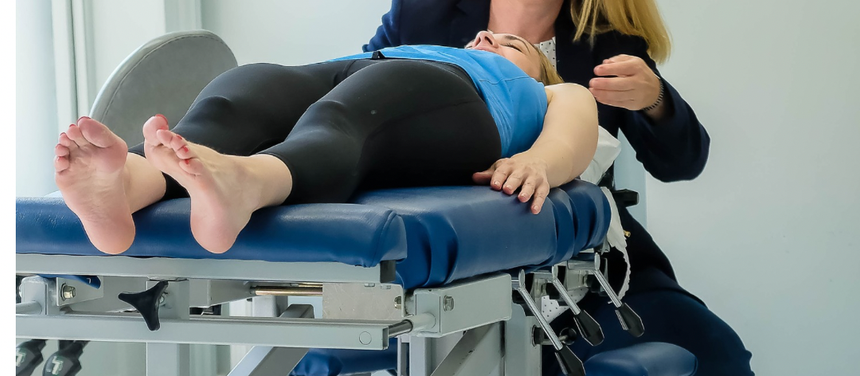
A chiropractor gently treats a patient lying on a treatment bench in a bright modern clinic
GCC Registered • Members of the BCA

Chiropractic

Our GCC-registered chiropractors bring an average of over 13 years’ experience each, with training spanning the UK and a Danish spinal hospital, postgraduate study in biomechanics and sports chiropractic, and an expert reviewer for Bupa. Your first appointment lasts 50–55 minutes, with a full assessment, a clear explanation and hands-on treatment in the same visit, at a time that fits around your City workday.

  • Back pain, neck pain, sciatica and slipped disc assessment
  • Headaches arising from the neck and desk-related neck and back pain
  • Shoulder, hip and knee pain, and minor sports injuries
  • Spinal manipulation & mobilisation, soft tissue therapy, dry needling and Graston (IASTM).
  • Rehabilitation and exercise programmes, co-managed with our physiotherapist
About chiropractic at Bodymotion →
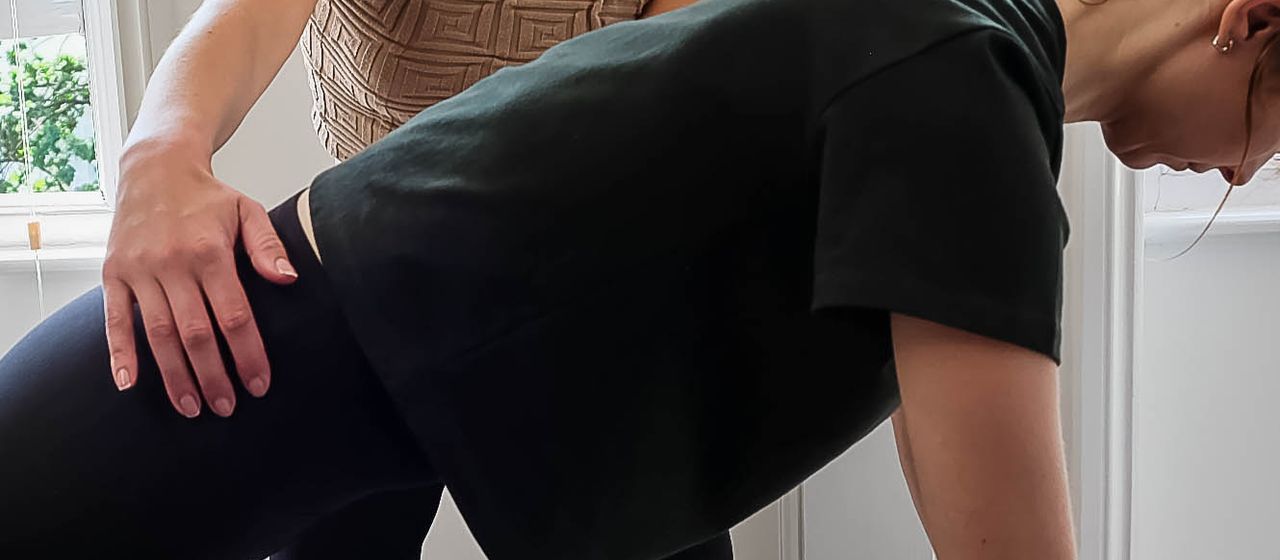
A physiotherapist guides a patient through a strengthening exercise on a Pilates reformer
HCPC Registered

Physiotherapy & Clinical Pilates

Our HCPC-registered physiotherapist trained at Monash University in Melbourne and holds postgraduate certifications in Clinical Pilates and dry needling. She combines hands-on treatment with a personalised exercise programme, from Mat and Reformer Pilates to strength work, built around your goals. You can book with her directly, or she’ll work alongside our chiropractors when a joined-up approach suits you best.

  • Back pain, neck pain and sports injuries
  • Clinical Mat and Reformer Pilates for core strength and stability
  • Injury and functional rehabilitation
  • Return to sport programmes
  • Ongoing exercise programmes to help you stay active
About physiotherapy & clinical pilates at Bodymotion →

Patient Reviews

What our muscle tension patients say

Deep Tissue Massage · Teodora Veverita
★★★★★

I've always had great service with Bodymotion. I've recently been seeing Teodora for deep tissue work who has been great and I would definitely recommend!

Jack M. · Google Review

Postural Tension
★★★★★

Three years ago I got a bad neck injury and have been experiencing problems there, around my shoulders and my upper back ever since. I've seen Teodora Veverita a few times which has helped a huge amount, so much of the tension has gone away and I am sleeping and feeling a lot better. I can highly recommend!

Henry R. · Google Review

Individual patient experience. Timeframes and outcomes vary between patients and are not guaranteed.

Frequently Asked Questions

Muscle tension questions answered

Why does the tension come straight back after a massage?

Because the treatment addressed the tight muscle and not the reason it tightened. If a restricted joint, a strength deficit or an unchanged working pattern is driving it, the tone returns within days. That is exactly when assessment is worth more than another session — and often when bringing chiropractic or physiotherapy alongside changes the picture.

Is deep tissue massage supposed to hurt?

It can be uncomfortable, particularly over trigger points, but it should stay within what you can breathe through and relax into. Pain that makes you tense up works against the treatment, and there is no evidence that harder work produces better outcomes. Tell your therapist during the session, not afterwards.

How often should I be treated?

For an established pattern, a short initial run of sessions relatively close together, then spacing them out as things improve. Many patients settle into a maintenance interval of four to six weeks. If you cannot go beyond a fortnight without it returning in full, something else needs assessing.

Should I see a massage therapist or a chiropractor?

If the problem is muscular tightness and aching with a full range of movement, soft tissue therapy is usually the right starting point. If there is joint stiffness, a restricted range, headaches, or any pins and needles or numbness, start with a chiropractic assessment. If you are not sure, book either — we will tell you if someone else in the team is the better fit.

Is soft tissue therapy covered by health insurance?

Our chiropractors and physiotherapists are registered with BUPA, AXA Health, WPA, Cigna, Allianz and Aviva, and we bill insurers directly — no upfront cost and no paperwork for you. Soft tissue therapy and sports massage are covered less often, so check your own policy wording before you book.

Where is Bodymotion located?

118A London Wall, London EC2Y 5JA in the City of London — one minute's walk from Moorgate station (Northern, Circle, Hammersmith & City and Metropolitan lines). Open Monday to Friday, 7:30am to 7pm.

Tight all the time? Let's find out why.

A 50–55 minute assessment, a clear diagnosis and a treatment plan with honest expectations. 118A London Wall, one minute from Moorgate. Open 7:30am–7pm, Monday to Friday.

Book Now 020 7374 2272Call Now