
MID BACK PAIN RELATING TO HERNIATED, PROLAPSED, SLIPPED DISC
The thoracic spine is located between the cervical spine (neck) and the lumbar spine (low back). It consists of 12 separate vertebrae which are named from the top to the bottom as T1 to T12. The mobility in this region is restricted because of the presence of the rigid rib cage which houses and protects our internal organs such as the heart and lungs.
The intervertebral discs are located between each of the vertebrae bodies (bones) of the thoracic spine. Commonly described as the “cushions” or “shock absorbers” of the spine, these circular pads of cartilage are composed of tough, fibrous tissue on the outside (annulus fibrosis) and a watery, gelatinous material on the inside (nucleus pulposus).
In the low back and neck, the discs are much more susceptible to injury than the mid back whereby the limited mobility in the thoracic spine reduces stress through the discs, making injury to these structures much rarer.
An Intervertebral Disc
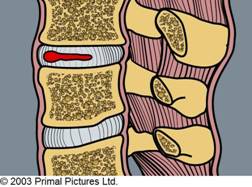
SYMPTOMS OF A THORACIC DISC BULGE
Symptoms arising from a thoracic disc injury are very varied with regards to location of pain and severity. The symptoms may be localised or radiate out across the mid back just on one side or both. If the disc bulge is causing irritation or compression of one of the nerves that exits the thoracic spine, there will also be alterations in sensation along the course of this nerve with resultant numbness or pins and needles. In the thoracic spine, nerve irritation commonly follows the course of the ribs across the back and around into the chest in what is termed a dermatomal distribution (see below).
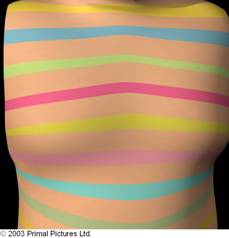
The symptoms described by patients often relate to aggravating positions which increase the pressure in the discal material, as well as manoeuvres which increase the traction on the nerve roots, i.e. sitting, slouching and looking down.
(The list of conditions given above and subsequent explanations are intended as a general guide and should not be considered a replacement for a full medical examination. Furthermore, we do not purport to treat all the conditions listed. Should you wish to discuss any of these conditions with our chiropractors, please do not hesitate to phone the clinic on 020 7374 2272 or email enquiries@body-motion.co.uk).
Our team of chiropractors and massage therapists are on hand to answer any questions you may have, so get in touch today via enquiries@body-motion.co.uk or on +44 (0)20 7374 2272.