
GLENOID LABRUM TEAR
The glenohumeral (GH) joint is the largest and most obvious joint in the shoulder complex. It is described as a “ball-and-socket” joint and consists of an articulation between the glenoid fossa of the shoulder blade (which forms the socket) and the head of the humerus (which forms the ball). One of the many reasons for such a high degree of mobility in the shoulder joint is that the socket of the joint is quite shallow and, therefore, the ball of the joint is able to move throughout its wide range without impeding on the surrounding bone. To combat this instability, the glenohumeral joint relies on the balance, strength and control of muscles, ligaments/capsule and labrum (cartilage) to function properly.
The labrum has a fibrocartilaginous rim attached around the margin of the glenoid cavity in the shoulder blade. In essence, the glenoid labrum is like a cup for the end of the arm bone (humerus) to move within. The labrum is ovoid in shape and fits snugly into the glenoid rim, however, the exact dimensions of the labrum are variable between individuals, and also from side to side in the same individual, and with changes in position of the humeral head.
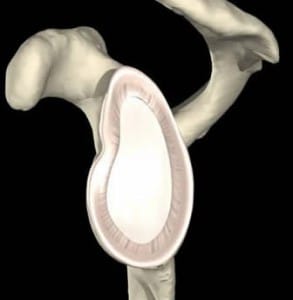
The glenoid labrum can become injured secondary to trauma and occurs in 85% of patients with an anterior shoulder dislocation(1). As such, labral tears are inherently difficult to diagnose, as they often coexist with other shoulder injuries. Other mechanisms of injury include either acute or chronic (i.e. throwers) traction or compression injuries to the shoulder
To make matters more difficult, the symptoms arising from a tear of the labrum are often vague and include poorly localised shoulder pain, which is often exacerbated by overhead and behind-the-back arm motions. There may also be associated symptoms such as popping, catching or grinding.
(1) Author: Ali Nawaz Khan, MBBS, FRCS, FRCP, FRCR, LRCP, Chairman of Medical Imaging, Professor of Radiology, NGHA, King Fahad National Guard Hospital, King Abdulaziz Medical City, Riyadh, Saudi Arabia.
Coauthor(s): Niranjan Desai, MB, BCh, FRCR, Consultant Radiologist, Department of DiagnosticRadiology, North Manchester General Hospital, UK; Velauthan Rudralingam, MB, BCh, BAO, FRCS, FRCR, Staff Physician, Gastrointestinal and Body Imaging Block, Hope Hospital and Wytenshawe Hospital, UK; Sirhan Alvi, BSc, MBChB, MRCS(Ed), MRCS(Glasg), Senior House Officer, Department of Orthopaedic Surgery, N Manchester General Hospital, UK. Contributor Information and Disclosures.
(The list of conditions given above and subsequent explanations are intended as a general guide and should not be considered a replacement for a full medical examination. Furthermore, we do not purport to treat all the conditions listed. Should you wish to discuss any of these conditions with our chiropractors, please do not hesitate to phone the clinic on 020 7374 2272 or email enquiries@body-motion.co.uk).
Our team of chiropractors and massage therapists are on hand to answer any questions you may have, so get in touch today via enquiries@body-motion.co.uk or on +44 (0)20 7374 2272.